
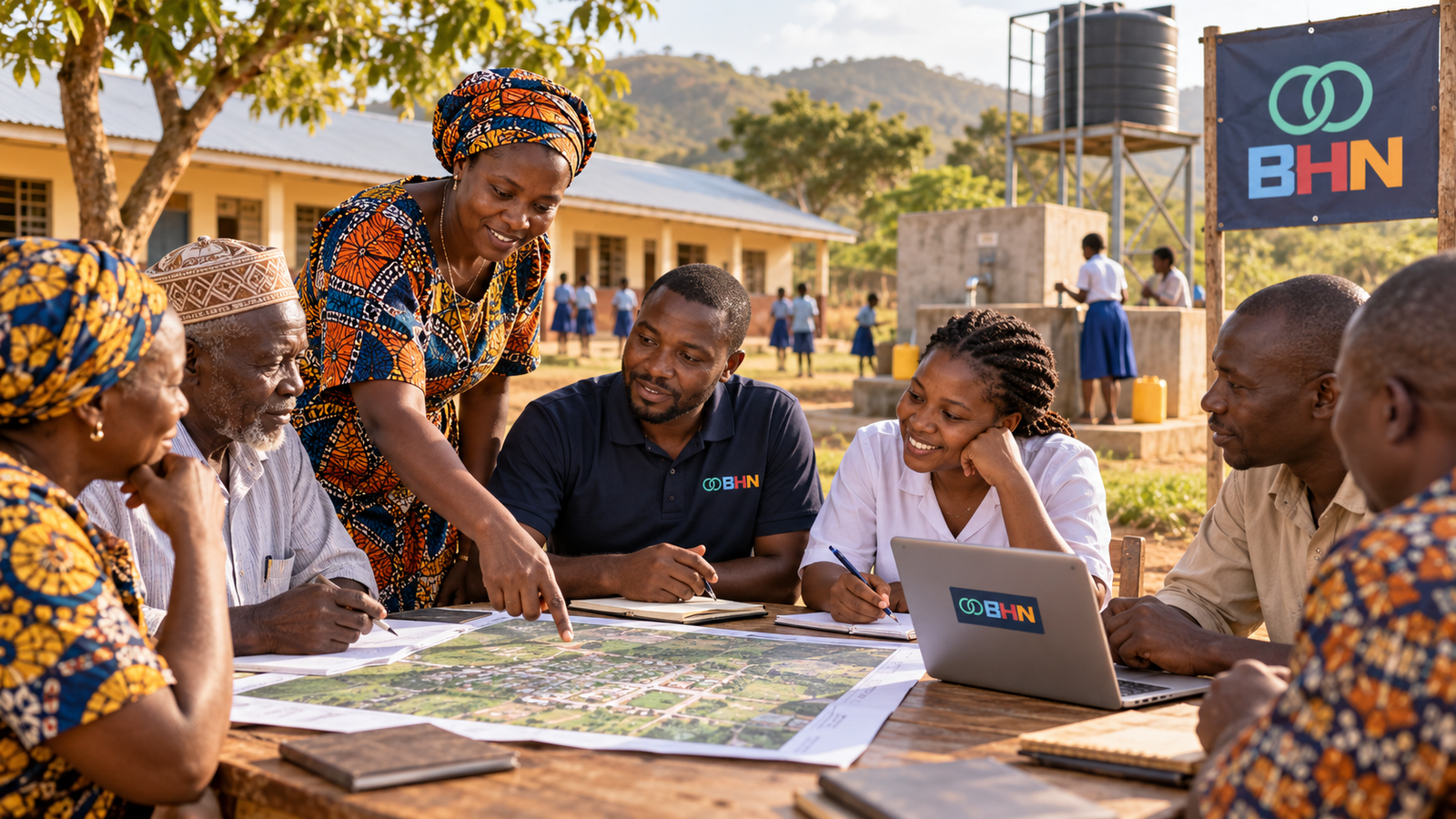
BHN connects technology with human priorities, including education, health, dignity and sustainable opportunity. Digital innovation can expand access to information and services, but its real value is measured by whether it helps people live healthier, safer and more productive lives.
Technology should respond to everyday realities
Across African communities, digital tools are increasingly part of how people learn, communicate, run businesses and access essential information. Mobile platforms can support health awareness. Online learning can widen access to education. Digital payment systems can help small enterprises participate in formal markets. Data tools can help community organisations understand needs and plan services more effectively. Yet technology can also deepen exclusion when people lack connectivity, digital skills, accessible devices or the confidence to use new systems.
That is why digital transformation should begin with people rather than platforms. A useful solution considers language, affordability, accessibility, local trust and the realities of the people expected to use it. It also recognises that digital skills are closely connected to wellbeing: a learner who gains confidence online may discover new education opportunities; a community worker with better information can make faster decisions; a small business owner who understands digital tools can reach customers beyond a local market.
Wellbeing requires responsible innovation
Responsible digital inclusion also means thinking about privacy, online safety and the quality of information people encounter. Artificial intelligence and other emerging technologies can improve productivity and expand access to knowledge, but communities need the ability to use them critically and safely. Digital literacy must therefore include judgement, ethics and awareness, not only technical competence.
BHN’s broader approach to community development places technology within this human context. Education, health, livelihoods and social participation are interconnected, so digital initiatives are most effective when they strengthen more than one dimension of opportunity.
The goal is not technology for its own sake. It is innovation that supports people to learn, make informed choices, connect with opportunities and participate more fully in the development of their communities. When digital progress is linked to human wellbeing, it becomes a practical tool for inclusive and sustainable development.