
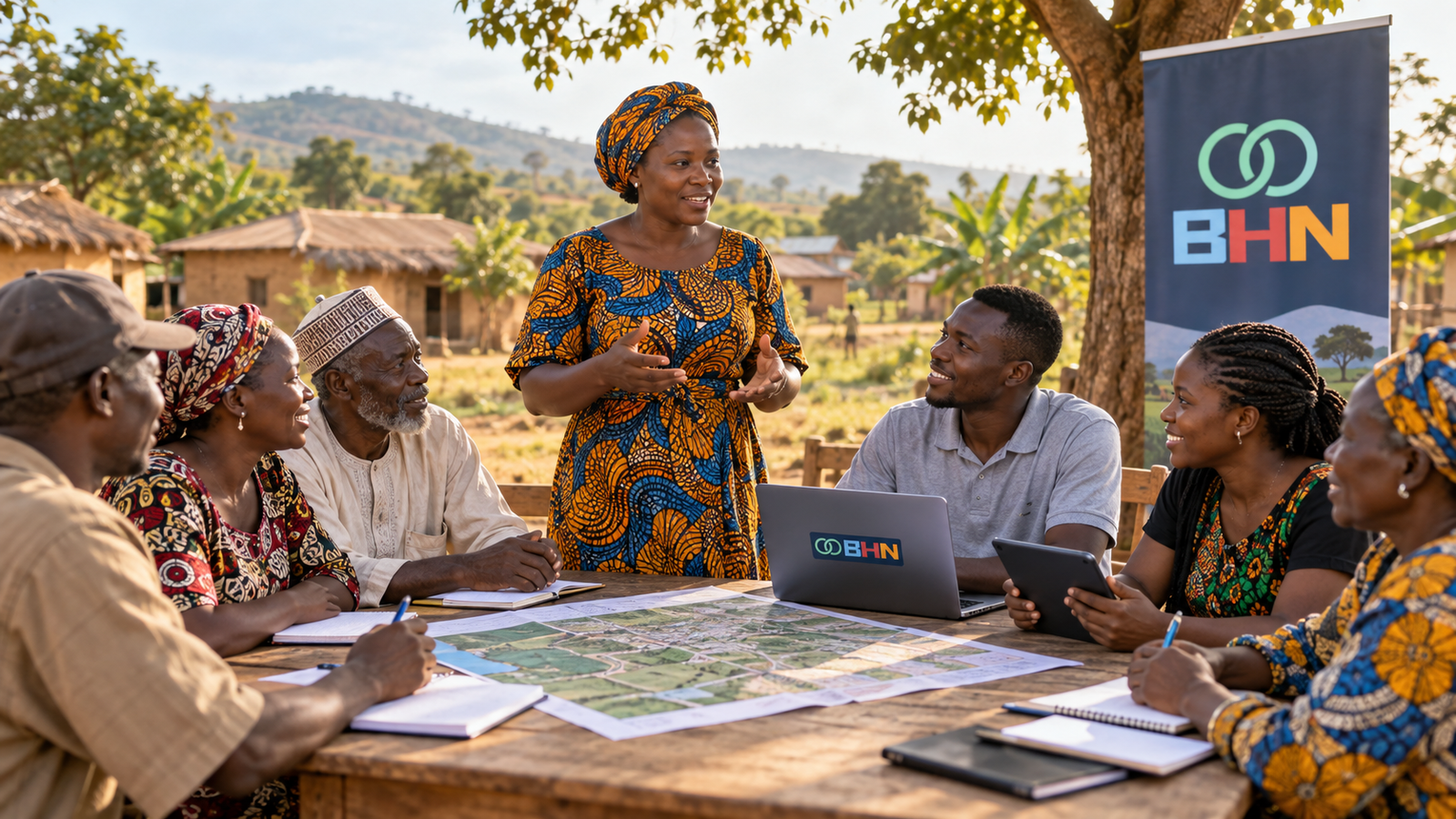
Communities understand their needs and strengths. BHN builds programmes through listening, partnership and shared responsibility. This principle is at the heart of locally led development: the people most affected by a challenge should have a meaningful role in defining the problem, shaping the response and judging whether it works.
Local knowledge improves decisions
Development initiatives can fail when solutions are designed far from the realities they are meant to address. A programme may look strong on paper but overlook transport barriers, language, social expectations, local institutions or the way people actually use services. Community participation brings this practical knowledge into planning from the beginning.
Local leadership also helps organisations identify assets that are easy to miss. Communities already have networks, volunteers, educators, entrepreneurs, youth leaders and informal systems of support. Effective development does not start from the assumption that nothing exists; it asks how existing strengths can be connected with new resources, skills and opportunities.
Ownership supports continuity
When people help shape an initiative, they are more likely to understand its purpose and contribute to its continuation. This matters in areas such as digital inclusion, education, health and livelihoods, where lasting change depends on behaviour, confidence and local capacity rather than on a one-time intervention.
For BHN, locally led development also means working through partnership. External expertise can be valuable, but it should strengthen the ability of local organisations and communities to act rather than create unnecessary dependency. Mentoring, training, access to technology and institutional collaboration have greater value when they leave behind knowledge and relationships that remain useful after a specific activity ends.
Accountability must work in both directions
Local leadership is not only about participation; it is also about accountability. Communities should be able to ask what was promised, what was delivered and what needs to change. Organisations, in turn, need honest feedback and evidence to improve their work.
Locally led development takes time because trust and partnership cannot be rushed. But that investment creates stronger foundations. When communities have voice, ownership and practical capacity, development becomes something people shape with others, not something that is simply delivered to them.