
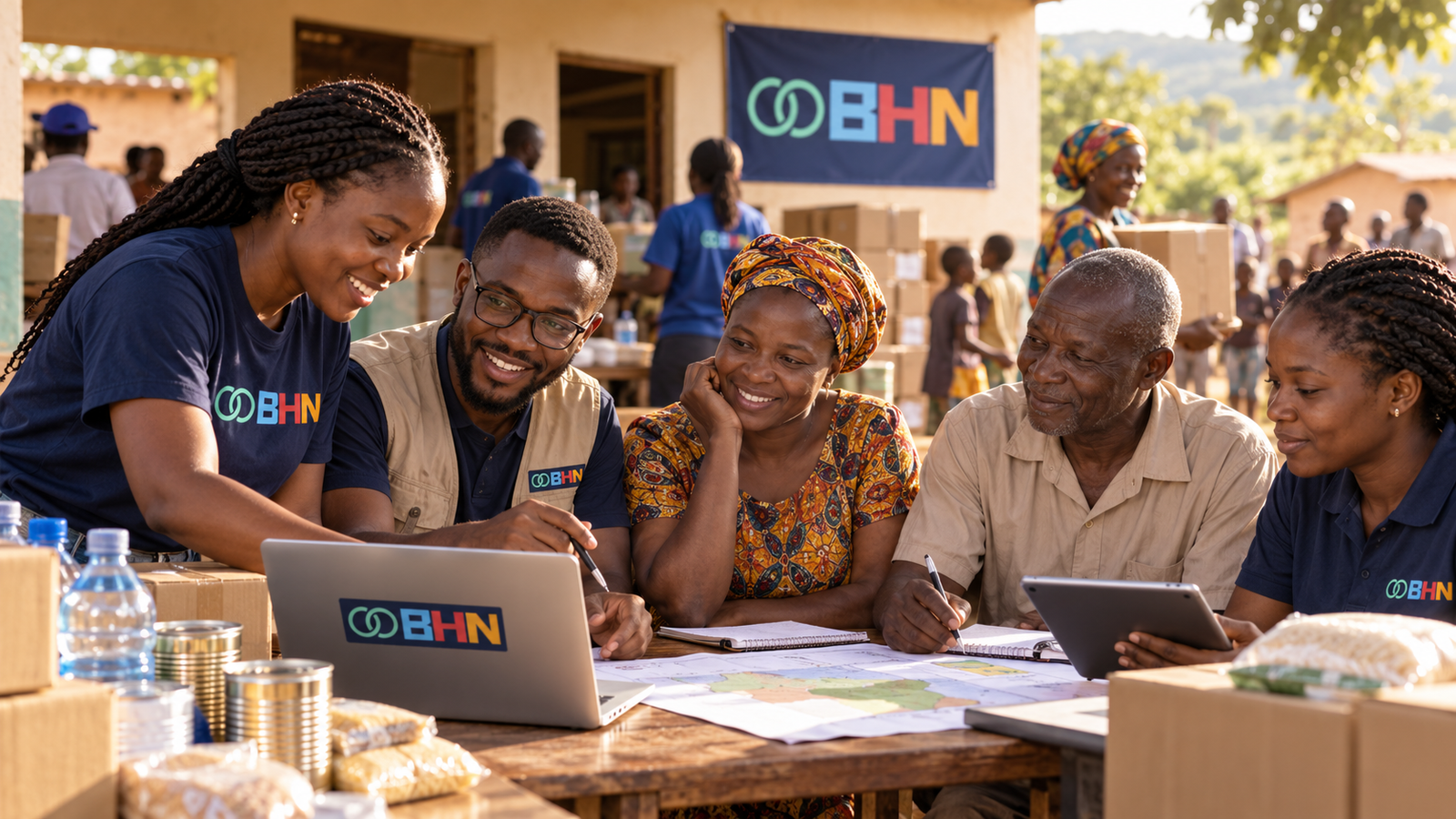
Volunteers, educators, technology specialists and institutional partners can contribute expertise, mentoring and resources. For a community-focused organisation such as BHN e.V., these contributions are most valuable when they strengthen local capacity and help create opportunities that communities can continue to build on.
Expertise can become practical opportunity
Many people want to contribute to development but are unsure where their experience can make a meaningful difference. A software professional can mentor a learner preparing for a digital career. An educator can support curriculum review or learning guidance. A communications specialist can help community initiatives tell their stories more effectively. Researchers and universities can contribute knowledge, while companies can support access to technology, professional learning or career exposure.
Volunteering is therefore not limited to short-term field activities. Remote mentoring, technical advice, training support, career coaching, research, translation and communications can all strengthen programmes. These forms of engagement are particularly useful when they are structured around clearly identified needs rather than around what a volunteer happens to want to provide.
Partnerships can extend reach and quality
Institutional partnerships offer another important pathway. Universities, technology companies, civil-society organisations, foundations and professional networks can help widen access to learning and specialist expertise. They can also strengthen programme quality by sharing knowledge, opening professional networks and supporting evidence-based approaches.
BHN’s mission is centred on digital inclusion, education, community wellbeing and sustainable opportunity, with a particular focus on underserved communities. Partners who share these priorities can contribute in ways that complement existing local knowledge rather than replace it. Effective collaboration begins with listening, clear responsibilities and respect for community leadership.
Support does not need to be large to be useful. One mentor can help a learner navigate an unfamiliar career path. A donated service can reduce the cost of delivering a programme. A professional network can connect participants to opportunities that were previously out of reach.
The strongest volunteer and partnership relationships are built around continuity, accountability and mutual learning. When people contribute their skills with humility and purpose, their support can help turn individual opportunities into stronger community systems and longer-term impact.