
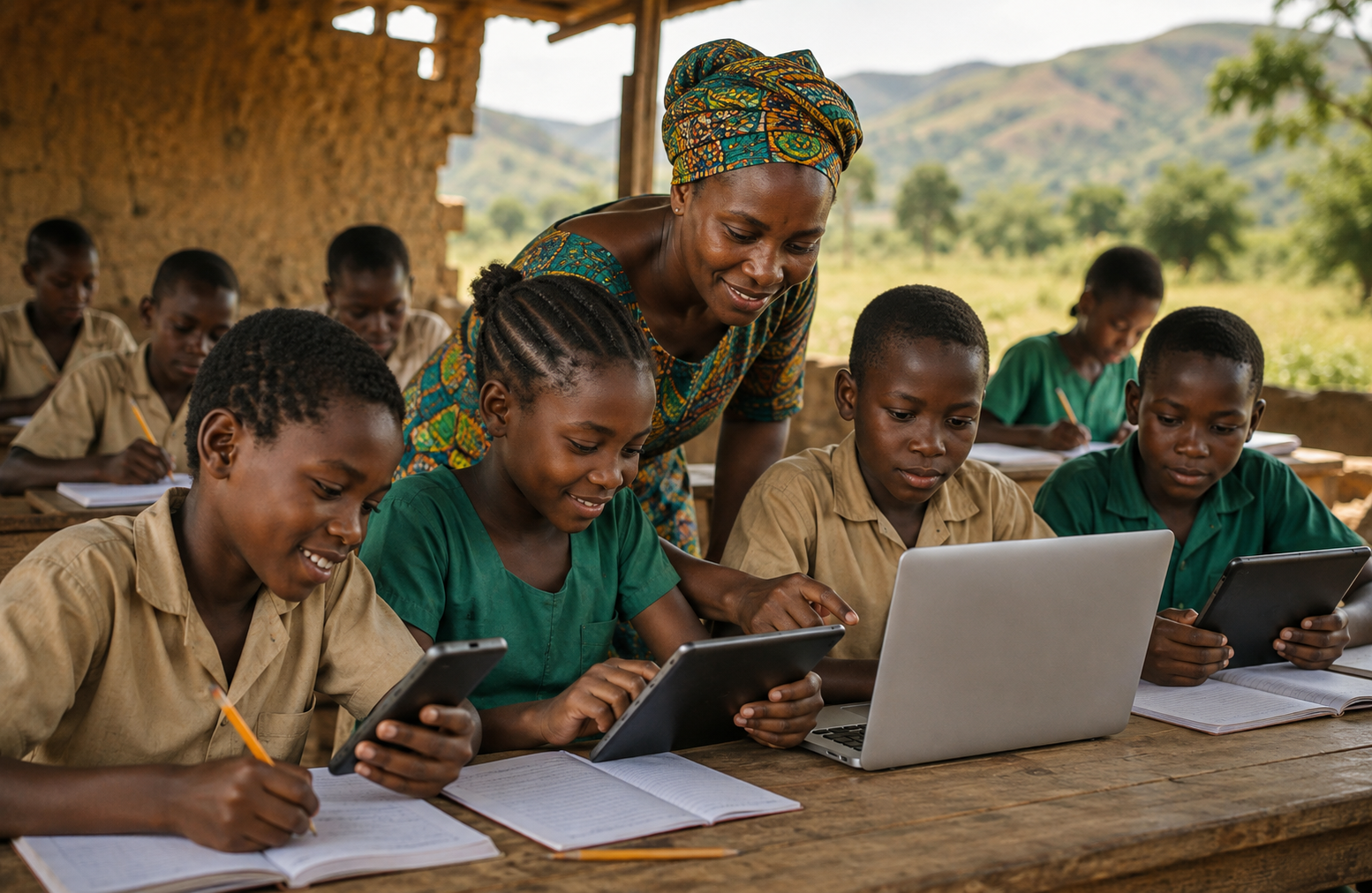
Support for schools, learners and communities can help overcome barriers to quality education in rural and underserved areas. Education remains one of the strongest foundations for long-term opportunity, but geography, household income, limited learning resources, connectivity and teacher support can all affect whether a child or young person is able to learn consistently.
Access is about more than being enrolled
A learner may technically have a place in school and still struggle to participate fully. Long travel distances, inadequate materials, unreliable electricity or a lack of internet access can limit learning. Teachers may also have fewer opportunities for professional development or access to digital resources than their counterparts in better-connected areas.
Rural education support therefore needs a broad view of access. Books, devices and connectivity can all be useful, but they are most effective when they fit local priorities and are accompanied by the knowledge needed to use them. Digital learning should strengthen teaching and learning rather than create additional pressure on schools with limited infrastructure.
Community involvement strengthens education
Parents, local leaders, teachers and youth organisations all influence whether education initiatives are trusted and sustained. Community participation can help identify which learners are being left behind, what practical barriers exist and which forms of support are most realistic.
BHN’s education work is connected to its broader commitment to digital inclusion and sustainable opportunity. Helping learners build foundational and digital skills can widen access to further study, vocational pathways and future employment. In rural communities, these opportunities can also reduce the sense that meaningful careers are available only to people who move to major cities.
Effective rural education support should be practical, inclusive and locally informed. It should pay particular attention to learners facing additional barriers, including girls, low-income households and people living in vulnerable circumstances. By strengthening access to learning resources, digital skills and supportive networks, communities can create stronger pathways from education to opportunity.