
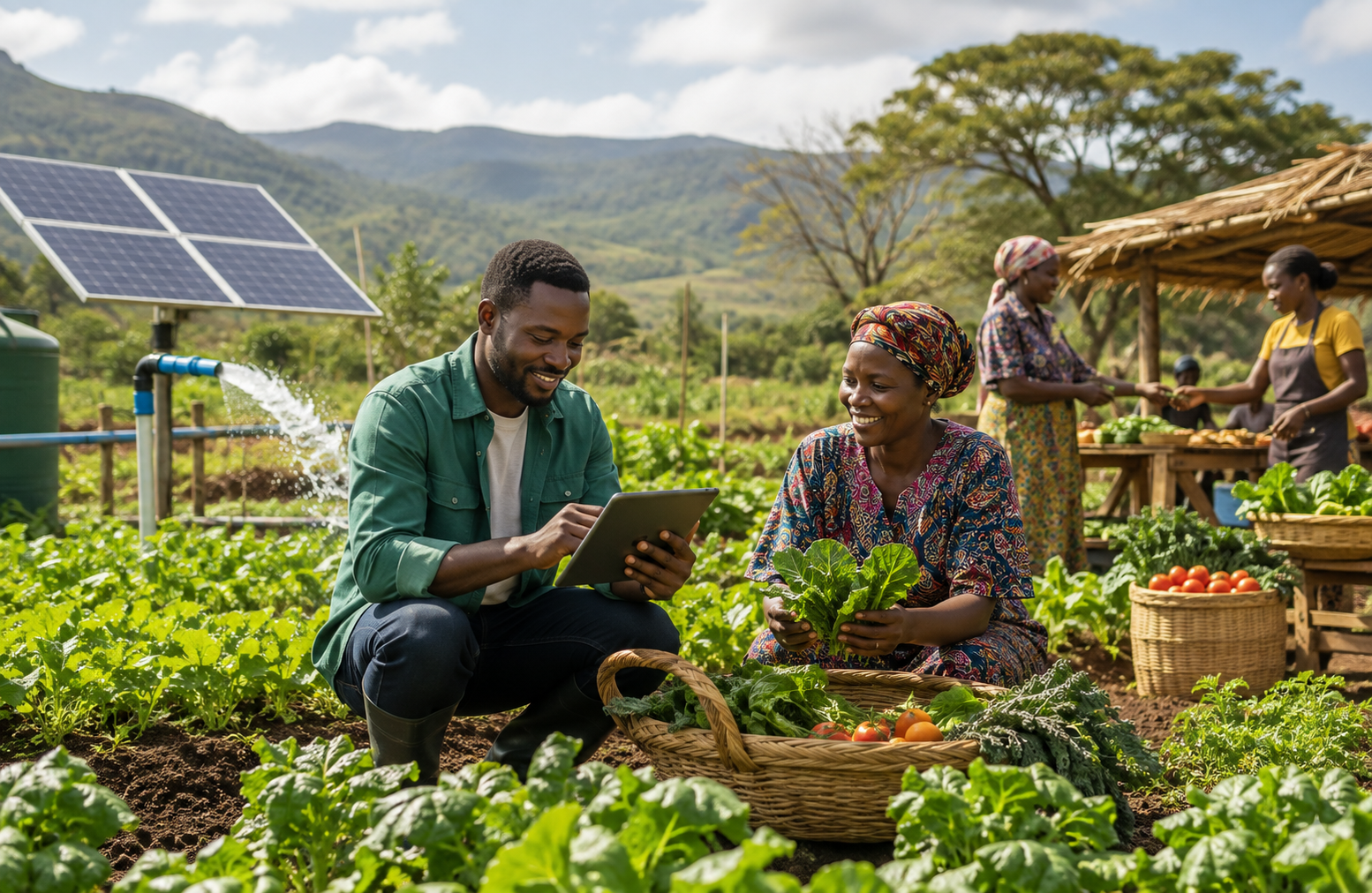
Digital and climate-aware approaches can support farmers, entrepreneurs and sustainable livelihoods. Across Africa, many households depend directly or indirectly on agriculture, local trade and small enterprise, making resilience in these areas essential for food security, income and community stability.
Better information can improve everyday decisions
Farmers and small businesses make frequent decisions about prices, weather, inputs, storage, transport and customers. Appropriate digital tools can help people organise this information and reduce uncertainty. Mobile market information, digital record-keeping, online training and communication with buyers are examples of relatively simple technologies that can support stronger decisions.
However, innovation should begin with local realities. A tool that requires constant high-speed internet or expensive equipment may be unsuitable for the people it is intended to help. Climate-smart and digital approaches work best when they are affordable, understandable and supported by practical training.
Resilient livelihoods need diversification
Climate shocks and changing markets can make dependence on a single source of income risky. Communities can strengthen resilience by developing skills and enterprises around agricultural value chains, including processing, logistics, marketing, repair services and digital commerce. Young people in rural areas can participate in these opportunities with the right combination of technical, entrepreneurial and digital skills.
BHN’s sustainable livelihoods focus connects digital inclusion with practical economic opportunity. The aim is to help communities use knowledge and technology in ways that strengthen local enterprise rather than promote technology for its own sake.
Supporting sustainable agriculture also means respecting local knowledge and environmental limits. Digital information can complement experience, but long-term progress depends on responsible resource use, viable markets and the ability of communities to adapt.
When farmers and entrepreneurs can access better information, build new skills and connect to wider markets, they gain more options for managing change. Those options are central to resilient livelihoods and to communities that are better prepared for economic and environmental uncertainty.