
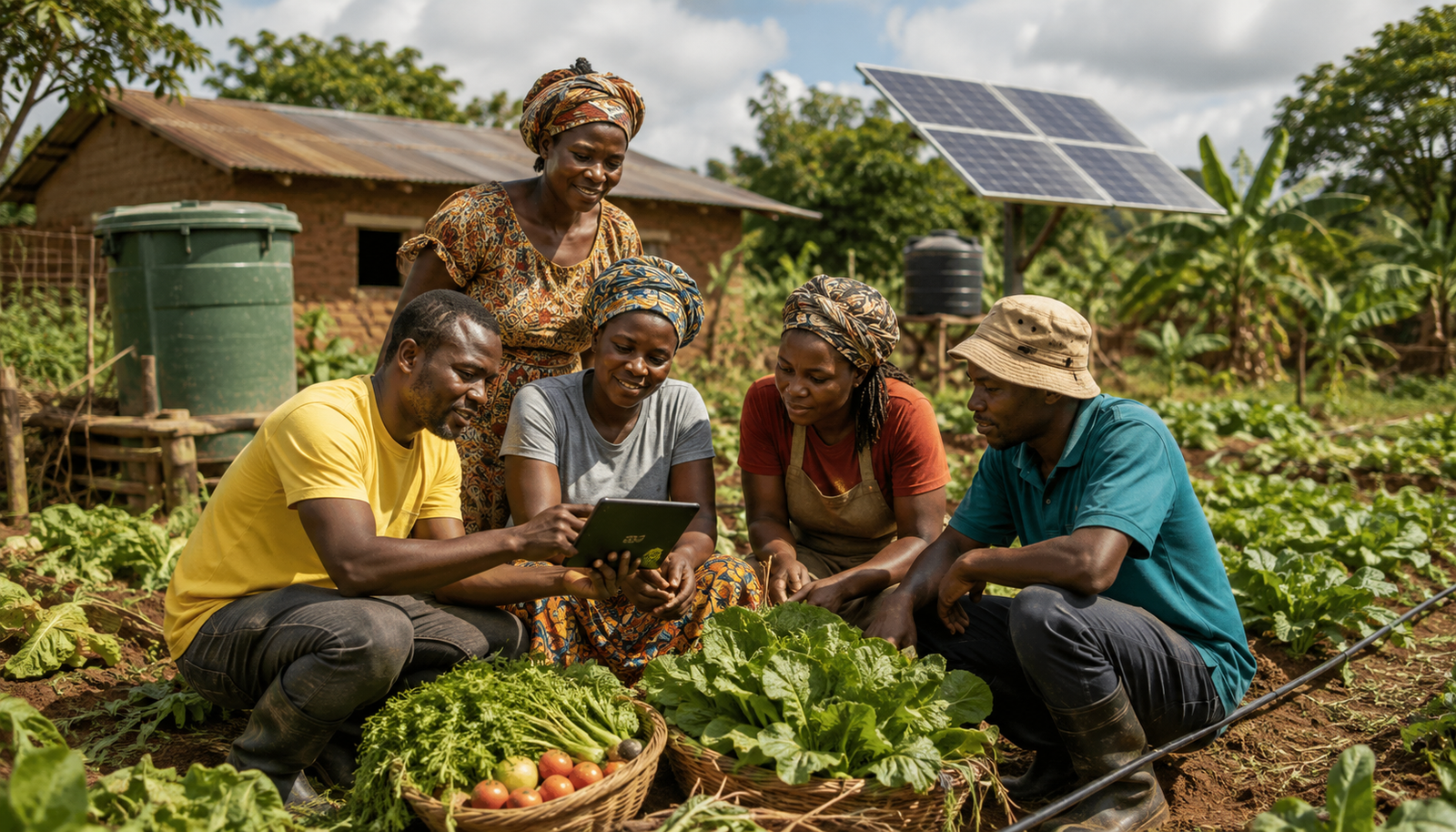
Digital and sustainable approaches for resilient local economies.
Practical knowledge strengthens resilience
Farmers make decisions every season about weather, inputs, planting, storage and markets. Access to reliable information can improve those decisions, but information must be timely and understandable. Mobile services, digital record-keeping, online training and market platforms can all be useful when people have the connectivity, skills and support to use them confidently.
Sustainability also requires attention to resource use. Better planning can help reduce waste, protect soil and water, and improve the ability of households to cope with unpredictable conditions. Digital tools can support this process, but they should complement local experience rather than assume that one technical solution will work everywhere.
Livelihoods extend beyond the farm
Resilient rural economies depend on more than production. Processing, transport, marketing, repair services, digital commerce and local entrepreneurship all create opportunities around agricultural value chains. Young people who develop digital and business skills can participate in these areas without necessarily becoming farmers themselves.
BHN’s interest in sustainable livelihoods reflects this wider picture. Digital inclusion can help community enterprises organise information, reach customers and explore new markets. Learning opportunities can also help participants understand entrepreneurship, financial management and technology in ways that are relevant to their local economy.
The goal is not to promote technology as a substitute for investment, infrastructure or sound agricultural practice. It is to help people use appropriate tools and knowledge to make stronger decisions. When digital skills, sustainability and enterprise development are connected, communities are better placed to diversify income, adapt to change and build livelihoods that can endure economic and environmental pressure.